Fire Door Inspection for Care Homes: Complete Guide
Published 13 April 2026
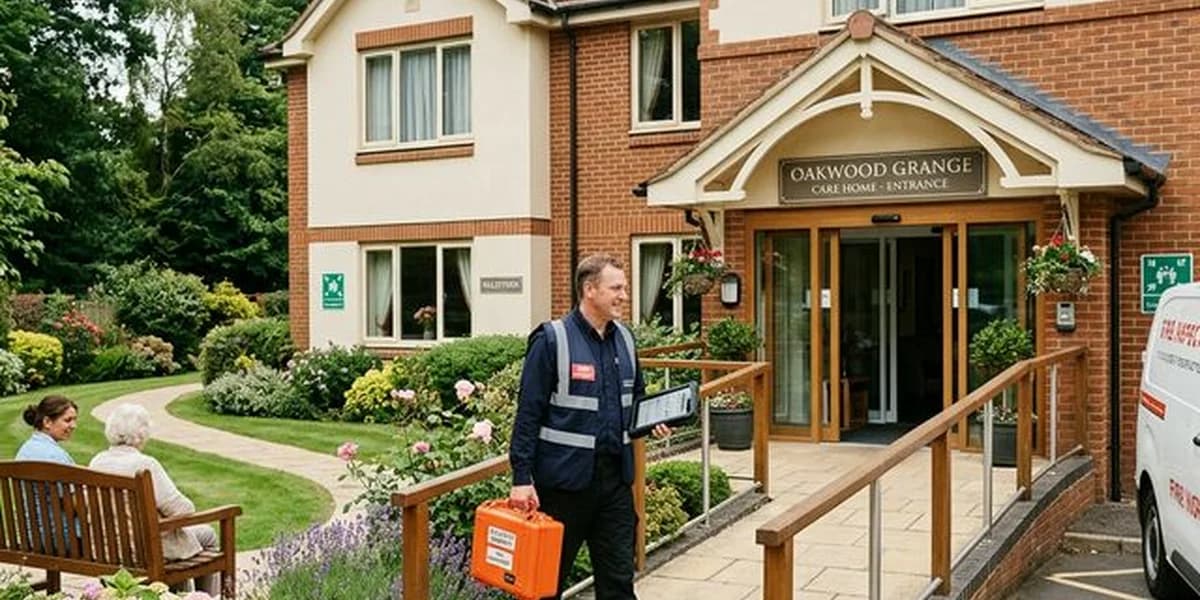
Care homes present unique fire door challenges due to vulnerable residents, frequent door use, and the widespread use of hold-open devices. Fire doors in care homes should be inspected at least every six months, with many operators adopting quarterly inspections as best practice. The Care Quality Commission (CQC) in England expects robust fire door maintenance as part of the “Safe” domain. This guide covers the specific requirements, common issues, and practical advice for care home operators.
Why Care Homes Need Extra Attention
Fire doors in care homes face a different set of pressures compared to most other building types:
- Vulnerable residents — many residents have limited mobility, cognitive impairment, or sensory loss, making evacuation difficult. Effective fire doors buy critical time for evacuation or “defend in place” strategies
- High door traffic — staff, visitors, delivery personnel, and mobile residents pass through fire doors dozens of times daily, accelerating wear on closers, seals, and hinges
- Hold-open devices — to assist resident movement and reduce noise, many care home fire doors are fitted with electromagnetic hold-open devices. These require specific maintenance and testing
- Regulatory scrutiny — CQC inspectors assess fire safety under the “Safe” domain. Fire door deficiencies can directly affect a care home’s overall rating
Legal Framework for Care Homes
Care homes in England must comply with multiple overlapping requirements:
Regulatory Reform (Fire Safety) Order 2005
The RRO applies to all non-domestic premises, including care homes. The responsible person (usually the care home operator or registered manager) must conduct a fire risk assessment, implement fire safety measures, and maintain them. Fire doors are a core component of the fire safety strategy.
Health and Social Care Act 2008 (Regulated Activities) Regulations
Regulation 12 requires care providers to assess and mitigate risks to health and safety. The CQC interprets this to include fire safety, and specifically checks fire door condition during inspections.
Fire Safety (England) Regulations 2022
While the FSER 2022’s quarterly inspection requirement targets high-rise residential buildings, it has raised the bar for fire door inspection standards across all building types. Many care home operators now align with the quarterly standard as a matter of best practice.
Building Regulations Approved Document B
Sets out the fire safety requirements for new buildings and material alterations. Care homes (classified as “residential institutional” buildings) have specific compartmentation requirements that dictate where fire doors must be installed.
How Often to Inspect
There is no single statutory frequency for care home fire door inspections. However, best practice based on current guidance is:
| Inspection Type | Frequency | Who |
|---|---|---|
| Visual staff checks | Weekly | Trained care home staff |
| Formal inspection (BS 8214) | Every 3–6 months | Competent fire door inspector |
| Hold-open device testing | Weekly (as part of fire alarm test) | Care home staff or alarm company |
| Comprehensive survey | Every 3–5 years | Fire door surveyor |
Weekly staff checks should confirm that doors close fully, are not wedged open, seals appear intact, and signage is in place. These supplement — but do not replace — formal inspections.
Common Fire Door Issues in Care Homes
Based on industry data, the most frequent fire door defects in care homes are:
- Self-closers not latching — high traffic wears out closers quickly. Doors that fail to latch from 5 degrees are a critical failure
- Damaged intumescent strips — wheelchairs, trolleys, and hospital beds regularly impact door edges, damaging or dislodging seals
- Excessive gaps at thresholds — carpet changes, floor wear, and building settlement can increase threshold gaps beyond the 8mm maximum
- Unauthorised modifications — kick plates, viewing panels, or extra locks added without fire-rated components
- Hold-open devices disconnected from the fire alarm — if the device does not release when the alarm sounds, the door is effectively permanently propped open
Many of these issues can be resolved through remediation rather than full door replacement, keeping costs manageable.
Hold-Open Devices: Getting Them Right
Hold-open devices are particularly common in care homes because they allow doors to remain open during normal operation, improving accessibility and reducing noise. To be compliant:
- The device must be connected to the building’s fire alarm system
- It must release the door automatically when the alarm activates, allowing the closer to shut the door
- The door must be capable of closing and latching fully under its own power when released
- Devices should be tested weekly as part of the fire alarm test
- Signs reading “Automatic Fire Door Keep Clear” must be displayed on both sides
Wedges, hooks, and other non-approved methods of holding fire doors open are never acceptable and represent an immediate fire safety risk. If staff are propping doors open, it usually indicates that closers are too strong or that there are insufficient hold-open devices — both fixable problems.
Choosing an Inspector for Care Homes
When selecting a fire door inspector for a care home, consider:
- Certification: look for FDIS, BM TRADA, or IFC accreditation
- Care home experience: inspectors familiar with care settings understand hold-open devices, accessibility requirements, and CQC expectations
- Reporting format: the report should be CQC-ready, with photographs, prioritised recommendations, and clear remediation guidance
- Remediation capability: some inspectors also offer remediation services, which can streamline the process
For typical costs, see our fire door inspection cost guide. To find inspectors experienced with care homes, filter our directory by care homes.
Finding a Qualified Inspector
Our directory lists over 750 verified fire door inspection companies across the UK, filterable by certification, service type, and building type. Browse all inspectors or find inspectors in your area:
Frequently Asked Questions
Will CQC downgrade a care home for fire door defects?
CQC can and does issue concerns or requirement notices under the “Safe” domain for fire safety deficiencies, including fire door defects. While a single failed fire door is unlikely to trigger a rating change, systemic issues — such as multiple failed doors, no inspection records, or doors wedged open — can contribute to an “Inadequate” rating for safety.
How much does fire door inspection cost for a care home?
Costs typically range from £5–£15 per door for inspection, depending on the number of doors, location, and inspector. A 40-bed care home might have 30–50 fire doors, so expect to pay £150–£750 per inspection visit. See our detailed cost guide for a full breakdown.
Can care home staff inspect fire doors themselves?
Staff can and should carry out weekly visual checks — confirming doors close fully, seals look intact, and hold-open devices work. However, formal compliance inspections should be conducted by a competent person with recognised qualifications. Many care groups train a nominated fire safety lead to conduct basic checks between professional inspections.
Last updated: 13 April 2026
Author: Find Fire Door Inspector Editorial Team
Sources & References
- Regulatory Reform (Fire Safety) Order 2005 — legislation.gov.uk
- CQC Regulation 12: Safe Care and Treatment
- BS 8214:2016 — Timber-based fire door assemblies
- Fire Safety Risk Assessment: Residential Care Premises — GOV.UK