Fire Door Inspection Training & Courses: Your Complete Guide (2026)
Last updated: 25 March 2026
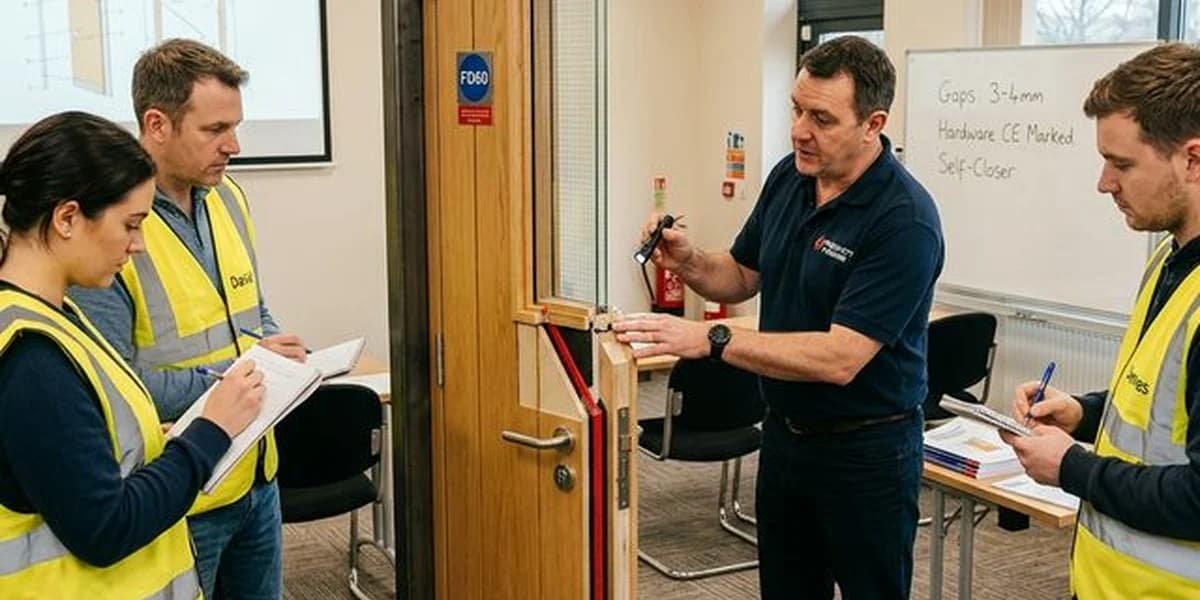
Fire door inspection training in the UK is available through several certification schemes, each with different focus areas, durations, and costs. The most recognised certifications are FDIS (Fire Door Inspection Scheme) for individual inspectors, BM TRADA Q-Mark for company certification, NAFDI for fire door installers and inspectors, and IFC Certification for comprehensive passive fire protection competency. The right course depends on whether you are training as a professional inspector, upskilling existing staff, or seeking company-level accreditation.
Fire Door Inspection Certification Schemes Compared
| Course / Scheme | Provider | Duration | Cost Range | What It Qualifies You For |
|---|---|---|---|---|
| FDIS Certification | Fire Door Inspection Scheme | 3 days + assessment | £800-£1,200 | Individual fire door inspector certification. Carry out inspections independently and issue FDIS inspection reports. |
| BM TRADA Q-Mark | BM TRADA | Audit-based (ongoing) | £1,000-£2,000/year | Company certification for fire door inspection and installation. Demonstrates quality management systems. |
| NAFDI Training | NAFDI | 1-2 days | £500-£900 | Fire door installation and inspection competency. NAFDI membership eligibility. |
| IFC Certification | IFC Certification Ltd | Audit-based (ongoing) | £1,500-£3,000/year | UKAS-accredited company certification for fire door and passive fire protection services. |
| FIRAS Registration | Warringtonfire | Audit-based (ongoing) | £1,200-£2,500/year | Contractor registration for passive fire protection installation and inspection. |
| Fire Door Awareness (basic) | Various providers | Half day | £200-£400 | Basic visual checking skills for building managers and facilities staff. Not a professional certification. |
Who Needs Fire Door Inspection Training?
Different levels of training are appropriate for different roles:
Professional Fire Door Inspectors
Individuals who carry out fire door inspections as their primary profession should hold FDIS certification at minimum. This provides the knowledge and credibility needed to issue professional inspection reports that are accepted by fire authorities, insurance companies, and building management firms. Many professional inspectors also hold BM TRADA or IFC certification at company level.
Building Managers and Facilities Staff
Building managers responsible for fire safety compliance should complete a fire door awareness course (half-day, £200-£400) to enable them to carry out basic visual checks between professional inspections. This is particularly important under the FSER 2022, where quarterly checks of common-part fire doors are required in buildings over 11 metres. Trained building staff can conduct these quarterly checks, with annual or six-monthly professional surveys providing the detailed BS 8214 compliance assessment.
Fire Door Installers
Companies that install fire doors should hold NAFDI membership, BM TRADA Q-Mark, or FIRAS registration. These schemes require training in fire door installation standards and include regular site audits to verify work quality. Many installers also train in inspection to offer full-lifecycle services covering installation, inspection, and maintenance.
Career Path: Becoming a Fire Door Inspector
Gain relevant experience
Most successful fire door inspectors come from backgrounds in construction, fire safety, passive fire protection, or building surveying. Experience with fire doors in any capacity provides a foundation for the technical knowledge needed.
Complete FDIS certification
The 3-day FDIS course covers fire door construction, standards, common defects, inspection methodology, and reporting. Successful completion of the written and practical assessment leads to FDIS certification.
Build practical experience
Work under the supervision of experienced inspectors for 6-12 months. This mentored period develops the practical skills needed to accurately assess fire doors in diverse building types.
Maintain certification
Complete annual CPD requirements, attend refresher training, and stay current with regulatory changes. Many inspectors also pursue additional certifications (IFC, FIRAS) to expand their service offering.
Establish or join a practice
Experienced inspectors can work independently, join established inspection firms, or set up their own companies. Company-level certifications (BM TRADA Q-Mark, IFC, FIRAS) add credibility and open access to larger contracts with housing associations, NHS trusts, and commercial property managers.
Find a Training Course
Ready to get certified? Visit the official training providers below to find upcoming courses, entry requirements, and booking information.
Frequently Asked Questions
What is the best fire door inspection course in the UK?
The FDIS (Fire Door Inspection Scheme) course is the most widely recognised dedicated fire door inspection certification. BM TRADA Q-Mark and IFC certification are also highly regarded. The best choice depends on whether you need individual inspector certification (FDIS) or company-level quality certification (BM TRADA, IFC).
How much does fire door inspection training cost?
Course costs range from approximately £800-£1,200 for FDIS certification, £500-£900 for NAFDI training, and £1,000-£2,000 for BM TRADA Q-Mark company certification (which includes audit fees). IFC certification typically costs £1,500-£3,000 depending on scope. Many providers offer in-house training at reduced per-person rates for larger groups.
Do building managers need fire door inspection training?
Building managers are not legally required to hold formal fire door inspection certification. However, the FSER 2022 requires 'competent' checks, and basic fire door awareness training (typically a half-day course costing £200-£400) enables building managers to carry out effective visual checks between professional inspections. This is considered best practice and can help identify urgent issues early.
How long does it take to become a certified fire door inspector?
The FDIS certification course takes 3 days of classroom training plus practical assessment. However, becoming an effective inspector also requires practical site experience. Most certification schemes recommend a minimum of 6-12 months of mentored site experience before working independently. The full pathway from initial training to independent practice typically takes 12-18 months.
Can I do fire door inspection training online?
Some basic fire door awareness courses are available online, and the theoretical components of some certification schemes can be completed remotely. However, all professional certification schemes require practical, hands-on assessment that must be completed in person. There is no fully online route to FDIS, BM TRADA, or IFC certification.
Sources & References
Related Guides
Fire Door Inspection Regulations UK
UK fire door inspection regulations: FSO 2005, Fire Safety Act 2021, FSER 2022, Building Safety Act 2022. Frequency, penalties, and compliance.
Fire Door Inspection Cost in the UK (2026 Guide)
Fire door inspection costs range from £3–12 per door. Compare prices by building type and get quotes from certified UK inspectors.
Fire Door Inspection Checklist
Fire door inspection checklist: gaps, seals, hinges, closers, signage, glazing, and labels. Know when to call a professional.