Fire Door Inspection Checklist: What Inspectors Check (2026)
Last updated: 25 March 2026
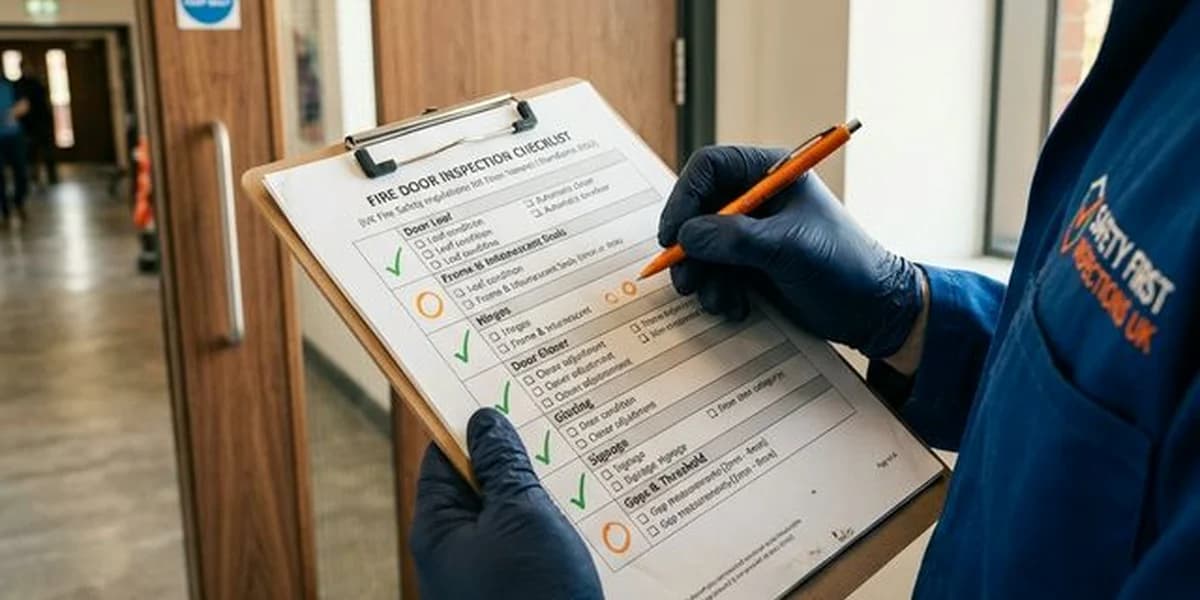
A fire door inspection checklist covers the systematic assessment of every component that contributes to a fire door's ability to resist fire and smoke for its rated period — typically 30 or 60 minutes (FD30 or FD60). Professional inspectors check the door leaf, frame, seals, closer, hinges, glazing, signage, and certification labelling against the requirements of BS 8214 and the relevant fire performance standards.
Complete Fire Door Inspection Checklist
The following checklist covers what a professional fire door inspector assesses during a full BS 8214 compliance survey. Each item should be documented with photographs and a pass/fail determination.
Door leaf condition
What to check: Check for damage, warping, delamination, holes, or modifications that could compromise fire resistance
Pass criteria: No visible damage, original construction intact, no unauthorised modifications
Gap tolerances
What to check: Measure gaps between door leaf and frame on all four edges using a gap gauge
Pass criteria: 2-4mm on top and sides (BS 8214). Bottom gap depends on threshold type — typically max 8mm
Intumescent strips
What to check: Check fire-resistant strips are present, continuous, and undamaged around door leaf or frame
Pass criteria: Strips present, not painted over, not damaged, correctly positioned in groove or face-fixed
Cold smoke seals
What to check: Verify brush or blade seals are present to prevent cold smoke passage
Pass criteria: Seals present, flexible, not matted or compressed, providing continuous contact
Self-closing device
What to check: Test that the door closes fully from any angle (including fully open) and latches without manual intervention
Pass criteria: Door closes and latches from any open position. Closer operates smoothly without excessive force
Hinges
What to check: Check hinges are CE/UKCA marked fire-rated, secure, and not worn. Minimum 3 hinges for FD30, may need 4 for FD60
Pass criteria: Correct number of fire-rated hinges, all screws present and tight, no excessive play
Glazing (if present)
What to check: Check fire-resistant glazing is intact, correctly beaded, and matches the door's fire rating
Pass criteria: Glazing intact, fire-rated beads present, no cracking, correct glazing system for rating
Signage
What to check: Check 'Fire Door Keep Shut' or 'Fire Door Keep Locked' signs are present and legible
Pass criteria: Appropriate signage visible on both sides of the door (or as specified in fire risk assessment)
Certification label
What to check: Look for a certification label or plug on the door leaf (top edge or hinge edge) confirming fire rating
Pass criteria: Label present and legible showing fire rating (FD30, FD60, etc.) and test evidence number
Frame condition
What to check: Check frame is securely fixed, not damaged, and fire-stopped around the perimeter
Pass criteria: Frame secure, no visible gaps between frame and wall, fire stopping intact
Threshold
What to check: Check threshold condition and whether a threshold strip or drop seal is present
Pass criteria: Threshold intact, any required seals functioning. No excessive gap at floor level
Hold-open devices
What to check: If electromagnetic hold-open devices are fitted, verify they are connected to the fire alarm system
Pass criteria: Device releases door on fire alarm activation, manual test successful, linked to correct zone
Basic Visual Check vs. Full Professional Survey
| Aspect | Basic Visual Check | Full Professional Survey |
|---|---|---|
| Who can do it | Trained building staff, caretakers | FDIS, BM TRADA, or IFC certified inspector |
| Equipment needed | None — visual only | Gap gauges, closer testing tools, camera, digital reporting system |
| Time per door | 1-2 minutes | 10-20 minutes |
| Gap measurement | Visual estimate only | Precise measurement with calibrated gauge |
| Report output | Simple pass/fail log | Detailed BS 8214 compliance report with photos and remediation plan |
| Legal standing | Satisfies basic FSER 2022 checks | Full compliance evidence for fire risk assessments and enforcement |
When to Call a Professional Inspector
While basic visual checks are valuable for ongoing monitoring between professional visits, there are situations where a certified inspector is essential:
- Your building has never had a formal fire door survey conducted by a certified inspector
- Your fire risk assessment has identified concerns about fire door compliance
- You have received an enforcement notice or improvement notice from the fire authority
- You are taking over management of a building and need baseline compliance data
- Your building is subject to FSER 2022 requirements (residential, over 11 metres)
- Fire doors have been damaged, modified, or are showing signs of wear that visual checks cannot fully assess
- Your insurance company or managing agent requires documented evidence of professional inspection
Frequently Asked Questions
What is the difference between a basic visual check and a full professional inspection?
A basic visual check can be carried out by trained building staff and covers obvious defects: does the door close, are seals visible, is there visible damage? A full professional inspection by a certified inspector (FDIS or equivalent) includes precise gap measurements, closer testing from all angles, intumescent strip assessment, glazing system verification, hardware audit, and a comprehensive written report with BS 8214 compliance status.
How long does a fire door inspection take?
A thorough professional inspection takes approximately 10-20 minutes per door depending on the door type and any defects found. A building with 50 fire doors would typically require 1-2 days of on-site inspection time, plus report writing time.
What happens if a fire door fails inspection?
Defects are categorised by priority: critical (immediate risk to life — door should be taken out of service or temporarily remediated), high (significant non-compliance requiring remediation within weeks), medium (defects requiring scheduled maintenance), and low (minor issues for planned maintenance). The inspector provides remediation recommendations for each defect.
Can I download a fire door inspection checklist?
A basic visual checklist for building staff is available from FDIS and the National Fire Chiefs Council. However, professional inspection requires specialist training and equipment (gap gauges, closer testing tools, knowledge of fire door construction). The checklist on this page covers what a professional inspector will assess.
When should I call a professional fire door inspector?
Call a professional inspector if: you have never had fire doors formally inspected, your fire risk assessment has identified fire door concerns, you have received an enforcement notice, you are taking over management of a new building, or your building is over 11 metres and subject to FSER 2022 quarterly inspection requirements.
Sources & References
- BS 8214:2016 — Timber-based fire door assemblies
- Fire Safety (England) Regulations 2022
- FDIS Inspection Methodology
- National Fire Chiefs Council — Fire Door Safety
Related Guides
Fire Door Inspection Regulations UK
UK fire door inspection regulations: FSO 2005, Fire Safety Act 2021, FSER 2022, Building Safety Act 2022. Frequency, penalties, and compliance.
Fire Door Inspection Cost in the UK (2026 Guide)
Fire door inspection costs range from £3–12 per door. Compare prices by building type and get quotes from certified UK inspectors.
Fire Door Inspection Training & Courses
Compare fire door inspection courses: FDIS, BM TRADA, NAFDI, IFC. Costs, duration, and career paths for UK inspectors.