Passive Fire Protection Survey — 399 Verified Companies
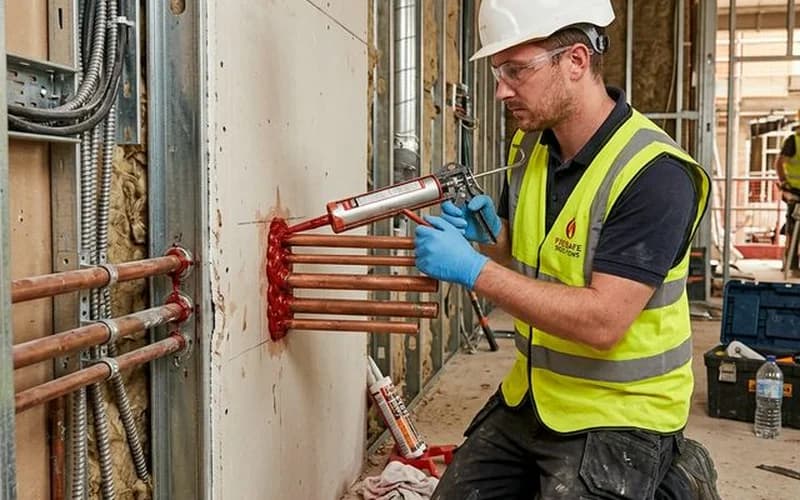
A passive fire protection survey goes beyond fire doors to assess the entire compartmentation strategy of a building. This includes fire stopping around service penetrations (pipes, cables, ducts passing through fire-rated walls and floors), compartment walls and floor integrity, cavity barriers in concealed spaces, fire dampers in ventilation ductwork, and the condition of fire-rated glazing and partitions. Many fire door inspection companies also offer broader passive fire surveys, providing a comprehensive picture of a building's ability to contain fire spread through its structural elements.
399 Companies Offering Passive Fire Protection Survey
Showing 1–20 of 399 companies
Newcastle upon Tyne, NE4 7YD
Doncaster, DN4 5JP
Worthing, BN14 7EL
 NAFDI
NAFDIHarpenden, AL5 2JD
 FDIS
FDISSevenoaks, TN15 6ES
 BM TRADA
Cambridge, CB25 0GH
 IFC
IFCPlymouth, PL7 1RZ
Milton Keynes, MK5 8FT
IFCWorcester, WR6 6LL
FDISCleckheaton, BD19 4DH
IFCGlasgow, G68 0HH
BM TRADASeaford, BN25 3LS
Belfast, BT5 4GX
 FIRAS
FIRASSolihull, B92 7JZ
FDISBillingham, TS23 4BF
Mansfield, NG19 8BE
Frequently Asked Questions
What is passive fire protection?
Passive fire protection (PFP) comprises the built-in fire resistance features of a building: fire-rated walls, floors, doors, fire stopping, cavity barriers, and dampers. Unlike active systems (sprinklers, alarms), passive fire protection works without activation — it's always 'on'.
When do I need a passive fire survey?
After any building refurbishment or alteration that may have compromised compartmentation, as part of a comprehensive fire risk assessment, when insurers request evidence of compartmentation integrity, or when fire doors are being assessed as part of a wider fire safety review.
How does a passive fire survey differ from a fire risk assessment?
A fire risk assessment covers all fire safety measures (detection, escape routes, extinguishers, training, plus passive protection). A passive fire survey focuses specifically on the structural compartmentation — walls, floors, doors, fire stopping, and dampers — in much greater technical detail.
Browse by Service
Last updated: March 2026