Fire Door Inspection for Landlords: Your Legal Obligations
Published 2 April 2026
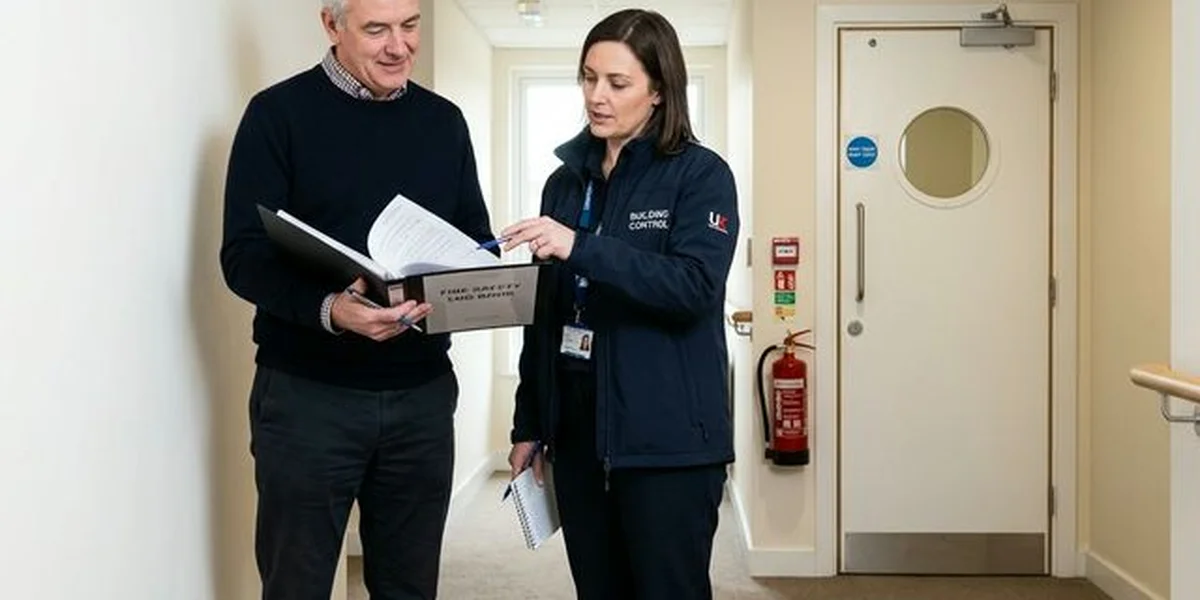
If you own or manage a residential building in England, you have a legal duty to ensure fire doors are regularly inspected. The Fire Safety (England) Regulations 2022 require quarterly inspections of communal fire doors in buildings over 11 metres. Failure to comply can result in unlimited fines and criminal prosecution. This guide explains exactly what landlords need to know.
Who Is the Responsible Person?
Under the Regulatory Reform (Fire Safety) Order 2005 (RRO), the “responsible person” is whoever has control of the premises. For residential buildings, this is typically:
- The freeholder or building owner
- The managing agent acting on behalf of the freeholder
- A residents’ management company (RMC) if one has been established
- An individual landlord who owns flats in a building and is responsible for communal areas
If you are a buy-to-let landlord in a managed block, the freeholder or managing agent is usually the responsible person. However, you may still have obligations regarding the fire doors within your flat and your flat entrance door.
Which Buildings Are Covered?
The FSER 2022 quarterly inspection requirement applies specifically to high-rise residential buildings over 11 metres in height (roughly seven storeys or more) in England. However, this does not mean lower-rise buildings are exempt from fire door maintenance:
- All non-domestic premises and communal areas of residential buildings fall under the RRO 2005
- The RRO requires fire safety measures — including fire doors — to be maintained in good working order
- Housing associations and social landlords often apply quarterly inspections across their entire portfolio, regardless of building height
Even for a converted house with two flats, if there are communal areas, the responsible person must ensure fire doors function correctly.
What Must Be Inspected?
For high-rise residential buildings, the FSER 2022 requires:
- Every three months: all fire doors in communal areas (corridors, lobbies, stairwells, plant rooms)
- Every twelve months: flat entrance doors that open onto communal areas
- Best endeavours: fire doors within individual flats — the responsible person must make reasonable efforts to gain access
Each inspection should follow the criteria in our fire door inspection checklist, covering the door leaf, seals, hinges, closer, gaps, glazing, and signage.
What About HMOs?
Houses in multiple occupation (HMOs) have additional fire safety requirements under the Housing Act 2004 and the Management of Houses in Multiple Occupation Regulations 2006. HMO landlords must maintain fire doors in all common areas and ensure they meet fire-resistance standards. Local authority licensing conditions often specify inspection intervals.
Keeping Inspection Records
While the FSER 2022 does not prescribe a specific format for records, landlords should maintain documentation showing:
- Date of each inspection
- Name and qualifications of the inspector
- Doors inspected (identified by location or asset number)
- Condition of each door — pass, advisory, or fail
- Defects found and remedial actions taken
- Dates of remediation and sign-off
Good records demonstrate compliance to fire and rescue service enforcement officers and can be critical evidence in the event of a fire.
Penalties for Non-Compliance
Fire safety enforcement in England is carried out by local fire and rescue authorities. If inspections reveal non-compliance, enforcement officers can issue:
- Alterations notices — requiring changes before a building can be used
- Enforcement notices — mandating specific remedial work within a deadline
- Prohibition notices — preventing use of all or part of a building
- Criminal prosecution — with unlimited fines on conviction
Since the Grenfell Tower fire in 2017, enforcement activity has increased significantly. The Building Safety Act 2022 further strengthened the regulatory framework. Landlords who fail to maintain fire doors are increasingly likely to face formal action.
Practical Steps for Landlords
Here is a practical compliance checklist for landlords:
- Identify your responsibilities — confirm whether you are the responsible person or whether a managing agent handles fire safety
- Audit your fire doors — commission an initial fire door survey to establish the condition of all doors
- Appoint a competent inspector — use a FDIS-certified or BM TRADA-accredited inspector for ongoing quarterly checks
- Remediate defects promptly — do not wait for the next scheduled inspection to fix critical failures
- Set up a schedule — calendar quarterly communal checks and annual flat entrance door checks
- Budget for ongoing costs — fire door inspections typically cost £5–£15 per door. See our cost guide for a detailed breakdown
- Keep records — maintain a fire door inspection log alongside your fire risk assessment
Search our directory to find a qualified fire door inspector in your area.
Finding a Qualified Inspector
Our directory lists over 750 verified fire door inspection companies across the UK, filterable by certification, service type, and building type. Browse all inspectors or find inspectors in your area:
Frequently Asked Questions
Are landlords personally liable for fire door compliance?
If you are the responsible person under the Fire Safety Order, yes. If you have appointed a managing agent, they may share liability, but as building owner you retain ultimate responsibility. It is essential to have a clear written agreement specifying who manages fire safety obligations.
Can I pass fire door inspection costs on to leaseholders?
In most cases, yes. Fire door inspections and maintenance are typically recoverable as part of the service charge under the terms of the lease. However, leaseholders can challenge unreasonable charges at the First-tier Tribunal (Property Chamber). Costs should be proportionate and well-documented.
What if a tenant refuses access for a fire door inspection?
The FSER 2022 requires the responsible person to make “best endeavours” to inspect doors within flats. This means writing to residents, offering alternative appointment times, and keeping records of your attempts. If access is repeatedly refused, document all efforts — this demonstrates compliance with the best-endeavours requirement.
Last updated: 2 April 2026
Author: Find Fire Door Inspector Editorial Team
Sources & References
- Fire Safety (England) Regulations 2022 — legislation.gov.uk
- Regulatory Reform (Fire Safety) Order 2005 — legislation.gov.uk
- FSER 2022 Guidance for Building Owners — GOV.UK
- Fire Safety Resources for Landlords — NRLA