Fire Door Inspection vs Survey: What's the Difference?
Published 16 April 2026
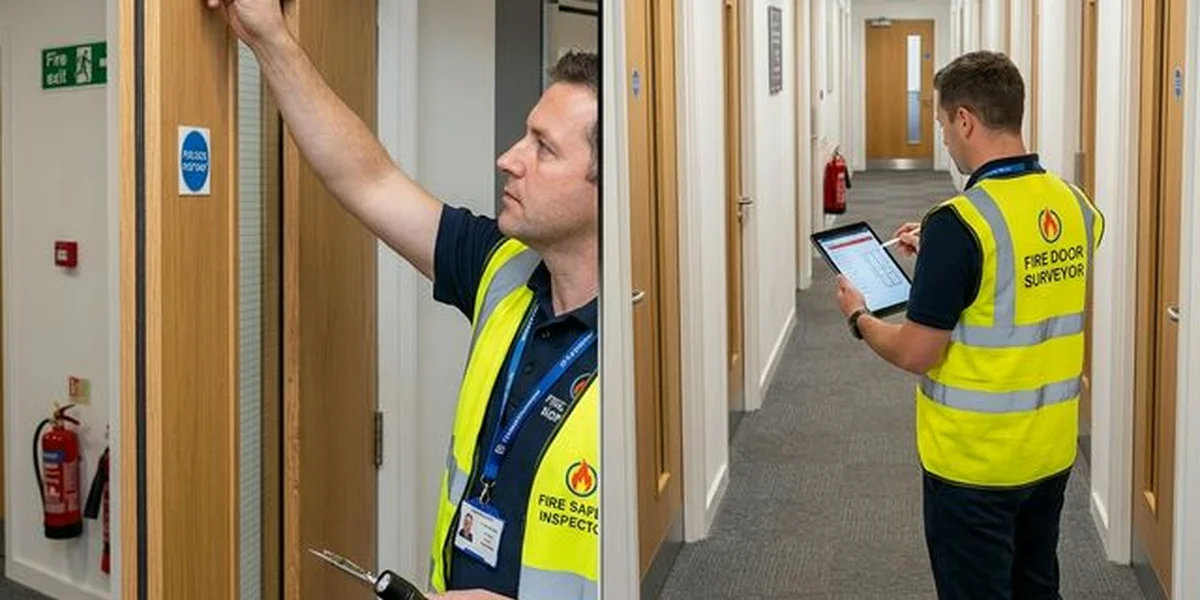
The terms “fire door inspection” and “fire door survey” are often used interchangeably, but they describe different levels of assessment. An inspection is a routine compliance check of individual fire doors against set criteria. A survey is a comprehensive, building-wide assessment that results in a detailed written report with remediation priorities and cost estimates. Understanding the difference helps you commission the right service at the right time.
Fire Door Inspection Explained
A fire door inspection is a routine check of individual fire doors against compliance criteria. It is the type of assessment required under the Fire Safety (England) Regulations 2022 for quarterly checks.
What it involves
- Visual and physical examination of each fire door against the standard checklist (gaps, seals, closer, hinges, glazing, signage)
- Pass, advisory, or fail rating per door
- Basic report listing defects and recommended actions
- Typically 5–15 minutes per door
What it does NOT involve
- Detailed investigation of door construction or certification history
- Full building compartmentation review
- Remediation cost estimates or procurement specifications
- Strategic maintenance planning
Think of an inspection as a routine health check — it confirms whether each door is currently fit for purpose and flags issues that need attention.
Fire Door Survey Explained
A fire door survey is a comprehensive assessment of all fire doors in a building. It goes beyond a pass/fail check to provide strategic insight into the fire door portfolio.
What it involves
- Full inventory of every fire door in the building, including type, rating, age, and certification status
- Detailed condition assessment of each door assembly (door, frame, hardware, seals)
- Review of fire door locations against building plans and compartmentation strategy
- Identification of missing fire doors (locations where fire doors should exist but do not)
- Prioritised remediation schedule (immediate, short-term, planned)
- Budget cost estimates for remediation and replacement
- Comprehensive written report, often 20–50+ pages with photographs
When a survey is deeper
A survey may also assess:
- Whether the correct fire rating (FD30 vs FD60) is installed in each location
- Whether fire doors comply with the original building design and approved plans
- The remaining serviceable life of doors approaching end-of-life
- Compliance with building type-specific requirements
Think of a survey as a full diagnostic examination — it gives you a complete picture of your fire door stock and a roadmap for bringing everything into compliance.
Key Differences at a Glance
| Aspect | Inspection | Survey |
|---|---|---|
| Purpose | Routine compliance check | Comprehensive condition assessment |
| Scope | Individual door compliance | Building-wide fire door portfolio |
| Time per door | 5–15 minutes | 15–30 minutes |
| Report | Pass/advisory/fail per door | Detailed report with photos, costs, priorities |
| Frequency | Quarterly or six-monthly | Every 3–5 years or when taking on a new building |
| Identifies missing doors | No | Yes |
| Cost estimates | Not usually | Yes — remediation and replacement budgets |
| Typical cost | £5–£15 per door | £15–£40 per door |
When You Need Each Service
Commission an inspection when:
- You need to meet the quarterly FSER 2022 requirement for high-rise residential buildings
- You have an existing door schedule and just need a routine compliance check
- Fire doors were recently surveyed and you are now in a maintenance cycle
- Your fire risk assessment has been updated and you need to verify specific doors
Commission a survey when:
- You are taking on a new building (purchase, new management contract, or new build handover)
- No previous fire door survey or door schedule exists
- The building has undergone refurbishment or alterations
- Your fire risk assessment has identified significant fire door concerns
- You need budget planning for a fire door replacement or remediation programme
- Following a fire or near-miss incident
- It has been more than 3–5 years since the last survey
In practice, most building managers start with a survey to establish a baseline, then move to regular inspections for ongoing compliance.
Cost Comparison
Costs vary by region, building complexity, and the number of doors, but typical UK pricing in 2026 is:
| Service | Cost per Door | Example: 50 Doors |
|---|---|---|
| Fire door inspection | £5–£15 | £250–£750 |
| Fire door survey | £15–£40 | £750–£2,000 |
Some companies offer combined packages — an initial survey followed by a fixed-price inspection contract. This can reduce overall costs and ensure continuity. For a detailed breakdown of all costs involved, see our fire door inspection cost guide.
Both inspections and surveys should be carried out by certified professionals. Browse our directory to find qualified inspectors near you.
Finding a Qualified Inspector
Our directory lists over 750 verified fire door inspection companies across the UK, filterable by certification, service type, and building type. Browse all inspectors or find inspectors in your area:
Frequently Asked Questions
Can the same company do both inspections and surveys?
Yes. Most fire door inspection companies offer both services. In fact, having the same company conduct your initial survey and subsequent inspections can improve continuity — they already know your door stock, have a baseline to compare against, and can track remediation progress. Check our directory for companies offering both services.
Does a survey count as an inspection for FSER 2022 compliance?
A survey typically exceeds the requirements of a routine inspection, so yes — a survey conducted by a competent person can satisfy the FSER 2022 quarterly check requirement for that period. However, you would still need routine inspections in subsequent quarters. Think of the survey as “quarter one” and then inspect normally in quarters two, three, and four.
How often should a full fire door survey be repeated?
Industry guidance recommends a comprehensive survey every 3–5 years, or sooner if the building undergoes significant changes (refurbishment, change of use, fire incident). Between surveys, regular quarterly or six-monthly inspections maintain ongoing compliance.
Last updated: 16 April 2026
Author: Find Fire Door Inspector Editorial Team
Sources & References
- Fire Safety (England) Regulations 2022 — legislation.gov.uk
- BS 8214:2016 — Timber-based fire door assemblies
- Fire Door Inspection Scheme (FDIS)