Fire Door Regulations 2026: What Building Managers Need to Know
Published 25 March 2026
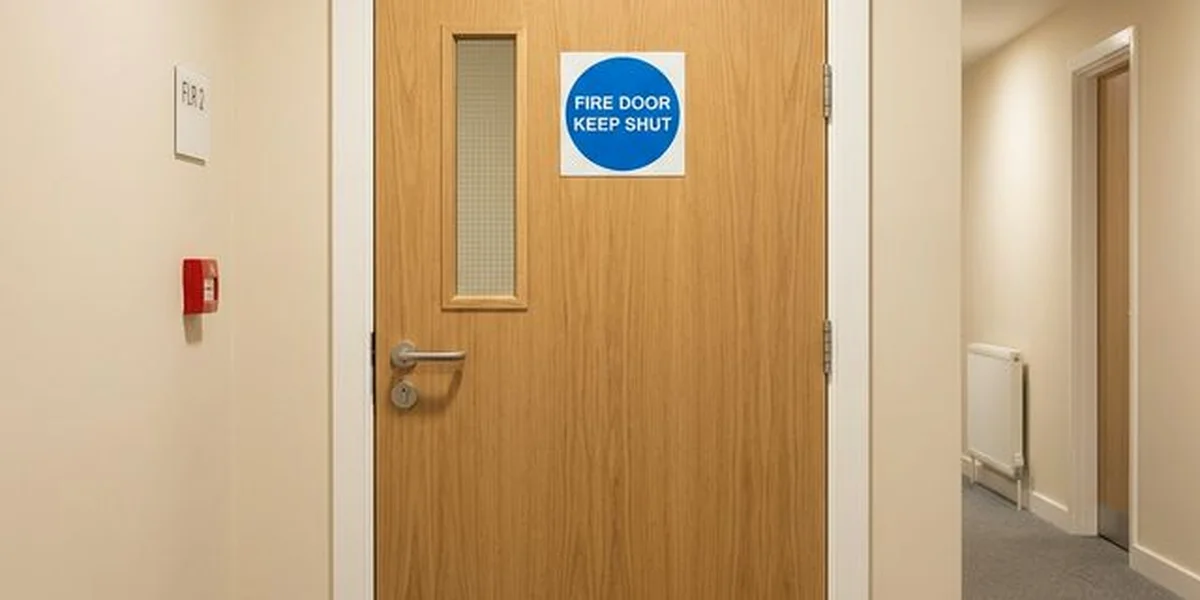
Fire door regulations in the UK are governed by the Regulatory Reform (Fire Safety) Order 2005, the Fire Safety Act 2021, the Fire Safety (England) Regulations 2022, and the Building Safety Act 2022. In 2026, building managers must ensure that fire doors in residential buildings over 11 metres are inspected quarterly in common parts and annually at flat entrance doors, while all commercial premises must maintain fire doors as part of their fire risk assessment.
Approved Document B: 2026 Amendments
The most significant development for 2026 is the updated Approved Document B (fire safety) guidance, which introduces enhanced compartmentation requirements for new-build residential and commercial properties. While Approved Document B primarily applies to new construction and major refurbishments, its updated specifications signal the direction of travel for the wider industry.
Key changes in the 2026 amendments include:
- Stricter certification evidence — new buildings must maintain fire door test evidence and chain-of-custody documentation from manufacturer to installation
- Enhanced closer specifications — fire door closers in high-traffic areas must meet BS EN 1154 power size 3 minimum (previously size 2 was acceptable in some scenarios)
- Electromagnetic hold-open guidance — new requirements for hold-open devices connected to fire detection systems, including regular testing protocols
- Improved signage standards — fire door signage must meet revised BS 5499 requirements with clearer “Fire Door Keep Shut” messaging
FSER 2022: Three Years of Enforcement
The Fire Safety (England) Regulations 2022 have now been in force for over three years, and enforcement patterns are becoming clear. Fire authorities across England have increased their inspection activity, with a particular focus on residential buildings over 11 metres where the quarterly common-part fire door checks and annual flat entrance door checks are mandatory requirements.
The Home Office’s latest fire safety statistics show a continued upward trend in enforcement notices related to fire door deficiencies. In 2025, fire doors were cited as a contributing factor in approximately 70% of enforcement actions taken against residential building managers. Non-compliance can result in enforcement notices, prohibition notices, and in serious cases, unlimited fines and imprisonment under the FSO 2005.
Building Safety Act: The Accountable Person Regime
The Building Safety Act 2022’s Accountable Person regime is now fully operational for higher-risk buildings (residential buildings over 18 metres or 7+ storeys). Accountable Persons must maintain comprehensive safety cases that include fire door asset registers, inspection records, and remediation timelines. The Building Safety Regulator has begun conducting audits of safety case documentation, and early findings suggest that fire door record-keeping is one of the most common areas of non-compliance.
For building managers of higher-risk buildings, this means fire door inspections must not only be carried out to the required standards — they must be thoroughly documented with clear audit trails. Digital fire door asset management systems are becoming the industry standard for maintaining the “golden thread” of building safety information required by the Act.
Inspection Frequency by Building Type
| Building Type | Common Parts | Flat Entrance Doors | Legal Basis |
|---|---|---|---|
| Residential >11m | Quarterly | Annually | FSER 2022 |
| Residential >18m (higher-risk) | Quarterly | Annually + BSA safety case | FSER 2022 + BSA 2022 |
| Commercial / offices | Six-monthly (BS 8214) | N/A | FSO 2005 |
| Hospitals / healthcare | Six-monthly (BS 8214) | N/A | FSO 2005 + HTM 05-02 |
| Care homes | Quarterly (best practice) | N/A | FSO 2005 + CQC standards |
| Schools / education | Six-monthly (BS 8214) | N/A | FSO 2005 + BB 100 |
What Building Managers Should Do Now
If you are responsible for fire door compliance in 2026, here are the key actions to prioritise:
- Confirm your inspection schedule. Buildings over 11 metres: quarterly common-part checks and annual flat entrance door checks. Commercial properties: six-monthly professional inspections per BS 8214 best practice.
- Verify your inspector’s qualifications. Use certified inspectors — FDIS, BM TRADA Q-Mark, IFC, or FIRAS. The competent person requirement means you need to demonstrate that inspections are carried out by suitably qualified individuals.
- Maintain documentation. Keep records of all inspections, defects found, remediation actions taken, and timelines. Higher-risk buildings must maintain this as part of their safety case.
- Budget for remediation. First-time professional inspections typically identify a 30–60% non-compliance rate. See our cost guide for typical remediation pricing.
- Stay informed. Fire door regulations continue to evolve. Subscribe to updates from your local fire authority, the National Fire Chiefs Council, and industry bodies such as FDIS and the Fire Industry Association.
Finding a Qualified Inspector
With fire door inspection demand at an all-time high, finding a qualified inspector in your area is more important than ever. Our directory lists over 750 verified fire door inspection companies across the UK, with certification status, services offered, building types served, and customer reviews.
Whether you manage a single residential block or a portfolio of thousands of properties, starting with a professional fire door survey is the essential first step to compliance. Compare inspectors in your area and request quotes to get started.
- Fire door inspectors in London
- Fire door inspectors in the South East
- Fire door inspectors in the North West
- Fire door inspectors in the West Midlands
Frequently Asked Questions
What are the key fire door regulations in 2026?
The main regulations are the FSO 2005 (all non-domestic premises), the FSER 2022 (residential buildings over 11m in England), and the Building Safety Act 2022 (higher-risk buildings over 18m). Approved Document B was updated in 2026 with enhanced requirements for new-build fire door specifications.
How often must fire doors be inspected?
Under the FSER 2022, fire doors in common parts of residential buildings over 11 metres must be checked quarterly, and flat entrance doors annually. BS 8214 recommends six-monthly professional inspections for all other building types as best practice.
What happens if fire door inspections are not carried out?
Non-compliance with fire door inspection requirements can result in enforcement notices, prohibition notices (which can close a building), and prosecution with unlimited fines and up to two years’ imprisonment. Building insurers may also void fire-related claims.
Who is a ‘competent person’ for fire door inspection?
The regulations require a ‘competent person’ but do not mandate specific certifications. In practice, holding FDIS, BM TRADA Q-Mark, IFC, or FIRAS certification is the most widely accepted way to demonstrate competency to fire authorities, insurers, and courts.
How much does a fire door inspection cost?
Costs typically range from £3–£12 per door for a standard inspection, with building-level costs of £350–£800 for a typical commercial property. See our full cost guide for detailed pricing by building type.
Last updated: 26 March 2026
Author: Find Fire Door Inspector Editorial Team
Sources & References
- Regulatory Reform (Fire Safety) Order 2005
- Fire Safety Act 2021
- Fire Safety (England) Regulations 2022
- Building Safety Act 2022
- BS 8214:2016 — Timber-based fire door assemblies