What Does a Fire Door Inspector Actually Check?
Published 9 April 2026
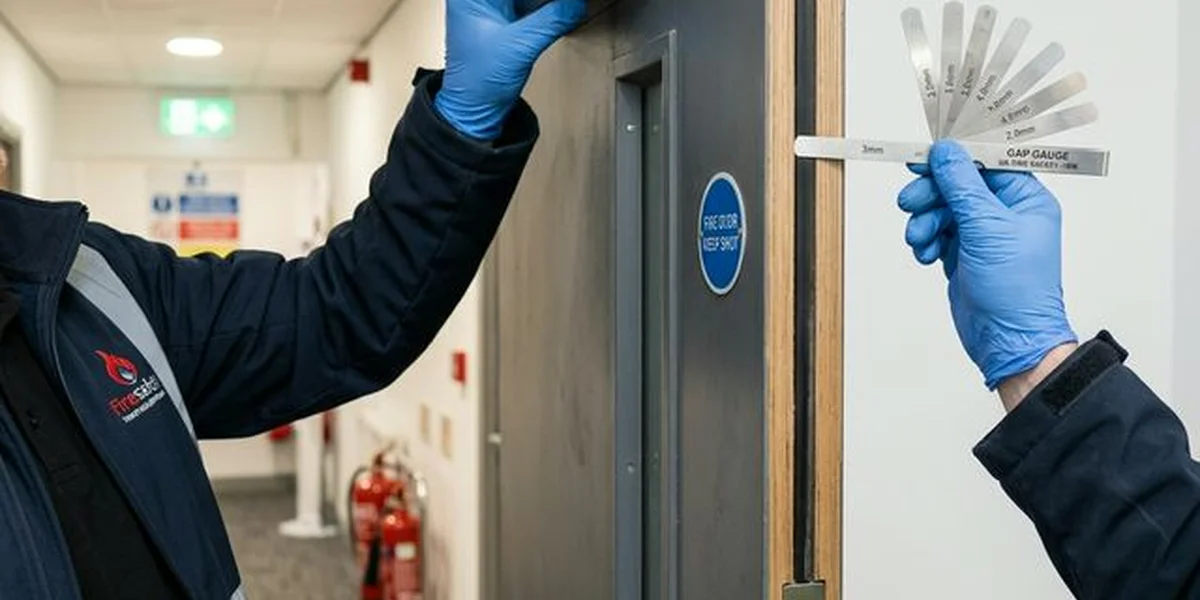
A fire door inspector systematically checks 12 critical elements of each fire door assembly to determine whether it will perform as intended during a fire. The inspection follows criteria from BS 8214:2016 and takes between 5 and 15 minutes per door. This guide walks through exactly what an inspector examines, the most common defects they find, and what happens after the inspection.
The Inspection Process
Before examining individual doors, a competent inspector will typically:
- Review documentation — check fire risk assessments, previous inspection reports, and any available door schedules or certification records
- Create a door schedule — assign a unique reference to each fire door for tracking purposes
- Inspect each door — work through the full checklist systematically
- Record findings — using digital inspection software or standardised report forms
- Produce a report — detailing the condition of every door with photographs of defects
The inspection is non-destructive — inspectors do not remove doors from frames or dismantle components. They assess what can be seen and measured in situ.
The 12-Point Inspection Checklist
Based on the criteria in BS 8214:2016 and the FDIS inspection scheme, here are the 12 elements checked on every fire door:
1. Door Leaf Condition
The inspector checks the door leaf for damage, warping, delamination, holes, or unauthorised modifications. Even minor damage can compromise fire resistance — a fire door is a tested and certified assembly, and any alteration may invalidate its rating.
2. Certification and Labelling
Every fire door should carry a label, plug, or marking confirming its fire rating (FD30 or FD60). The inspector checks for a BM TRADA Q-Mark, BWF-Certifire label, or manufacturer’s identification. Missing labels make it impossible to confirm the door’s rating.
3. Intumescent Strips
Intumescent strips expand when heated to seal the gap between the door and frame. The inspector checks they are present on all required edges, properly fitted into grooves or surface-mounted, continuous (not patched), and of the correct specification for the door’s rating.
4. Smoke Seals
Cold smoke seals (usually a brush or rubber strip combined with the intumescent) prevent smoke from passing around the door. The inspector verifies they are fitted, undamaged, and make contact when the door is closed.
5. Hinges
Fire doors require a minimum of three CE-marked hinges (or two for lighter doors, depending on the test evidence). The inspector checks the number, type, and fixings — loose or missing screws are a common defect.
6. Self-Closing Device
The door must close fully into the frame from any angle without manual assistance. The inspector tests the closer by opening the door to various angles (including just 5 degrees from the frame) and confirming it latches every time.
7. Gap Tolerances
This is one of the most critical checks. Using a gap gauge, the inspector measures clearance on all four edges:
- Top and sides: 3mm ±1mm (so 2–4mm is acceptable)
- Meeting stiles (double doors): 3mm ±1mm
- Threshold: maximum 8mm (or 3mm ±1mm if a threshold seal is fitted)
Gaps that are too large allow fire and smoke to pass; gaps that are too small cause binding and prevent the door from closing. Both are failures.
8. Glazing
If the door contains glazed panels, the inspector checks that the glass is fire-rated (usually marked with a kite mark or manufacturer stamp), properly retained in fire-rated beading, and free from cracks or damage. Non-fire-rated glass in a fire door is a critical failure.
9. Frame and Threshold
The door frame must be securely fixed to the wall, with no gaps between the frame and the structural opening (or gaps correctly fire-stopped). The inspector checks for frame damage, loose fixings, and correct fire stopping.
10. Signage
Fire doors on escape routes must display “Fire Door Keep Shut” signs. Doors held open by electromagnetic hold-open devices should display “Automatic Fire Door Keep Clear.” Missing or incorrect signage is an advisory or fail item.
11. Lock and Latch Hardware
The lock, latch, and any other hardware must be compatible with the door’s fire rating and certification. Unauthorised locks, letterboxes, cat flaps, or viewing panels can compromise the assembly’s fire resistance.
12. Hold-Open Devices
If the fire door is held open, the inspector checks that the hold-open device is connected to the fire alarm system and releases the door automatically when the alarm activates. Wedges, hooks, or other non-approved hold-open methods are an immediate failure.
For the full criteria in a downloadable format, see our fire door inspection checklist.
Most Common Defects Found
Data from fire door inspection companies consistently shows the same defects appearing across all building types:
- Excessive gaps (especially at thresholds) — found on approximately 40% of doors
- Missing or damaged intumescent strips/smoke seals — around 35% of doors
- Self-closer not functioning correctly — door does not latch from 5 degrees — around 30%
- Missing certification labels — around 25% (especially older doors)
- Doors held open by wedges — around 15%
Many of these defects are straightforward to remedy through fire door remediation rather than full replacement.
Pass, Advisory, and Fail Ratings
Most inspection schemes use a three-tier rating system:
- Pass: the door assembly meets all criteria and is fit for purpose
- Advisory: minor issues that do not immediately compromise fire performance but should be addressed (e.g., missing signage, minor cosmetic damage)
- Fail: one or more critical defects that mean the door cannot be relied upon in a fire (e.g., excessive gaps, missing intumescent strips, non-functioning closer)
A failed door does not necessarily need replacing — many defects can be corrected through remediation. However, the responsible person must act on failures promptly.
What Happens After the Inspection?
After completing the inspection, the inspector provides a detailed report including:
- A summary of all doors inspected with individual pass/advisory/fail ratings
- Photographs of every defect
- Prioritised remediation recommendations (immediate, within 30 days, planned maintenance)
- An overall compliance status for the building
The responsible person should use this report to commission remediation work, update the fire risk assessment, and schedule the next inspection. For information on typical costs, see our cost guide. To find a qualified inspector, browse our directory.
Finding a Qualified Inspector
Our directory lists over 750 verified fire door inspection companies across the UK, filterable by certification, service type, and building type. Browse all inspectors or find inspectors in your area:
Frequently Asked Questions
How long does a fire door inspection take per door?
A thorough inspection takes between 5 and 15 minutes per door, depending on the door’s condition and the number of defects found. For a typical residential block with 30 communal fire doors, allow 3–4 hours for the full inspection including report writing.
Can an inspector open up a fire door to check internal components?
No. A standard fire door inspection is non-destructive. Inspectors assess what is visible and measurable without removing the door or dismantling components. If there are concerns about internal construction (for example, suspected non-fire-rated cores), the inspector may recommend further investigation or replacement.
What qualifications should a fire door inspector have?
Look for inspectors certified under the FDIS (Fire Door Inspection Scheme), BM TRADA, or IFC Certification. These schemes require inspectors to pass exams and maintain continuing professional development. See our training guide for more on qualifications.
Last updated: 9 April 2026
Author: Find Fire Door Inspector Editorial Team
Sources & References
- BS 8214:2016 — Timber-based fire door assemblies
- Fire Door Inspection Scheme (FDIS)
- FSER 2022 Guidance — GOV.UK